Follow Us:

News

A Guide to Avoiding Pitfalls When Purchasing Automotive Seals

2025-12-15

Three common problems with automotive connector seals: A must-read guide to avoid pitfalls during procurement.

Having worked in the sealing industry for 20 years, the most frequent topics of conversation with automotive connector buyers are not about "impressive specifications," but rather "this batch of goods leaked after being installed in the car," "the customer returned the goods and demanded 300,000 yuan in compensation," and "the production line was shut down for 3 days while we tried to find the cause." Based on real-world cases from over 50 of our clients and SAE industry data (nearly 30% of sealing failures are preventable), today we'll use simple language to break down three common problems faced by buyers – no technical jargon, just focusing on "how much money you'll lose and how to avoid these pitfalls."

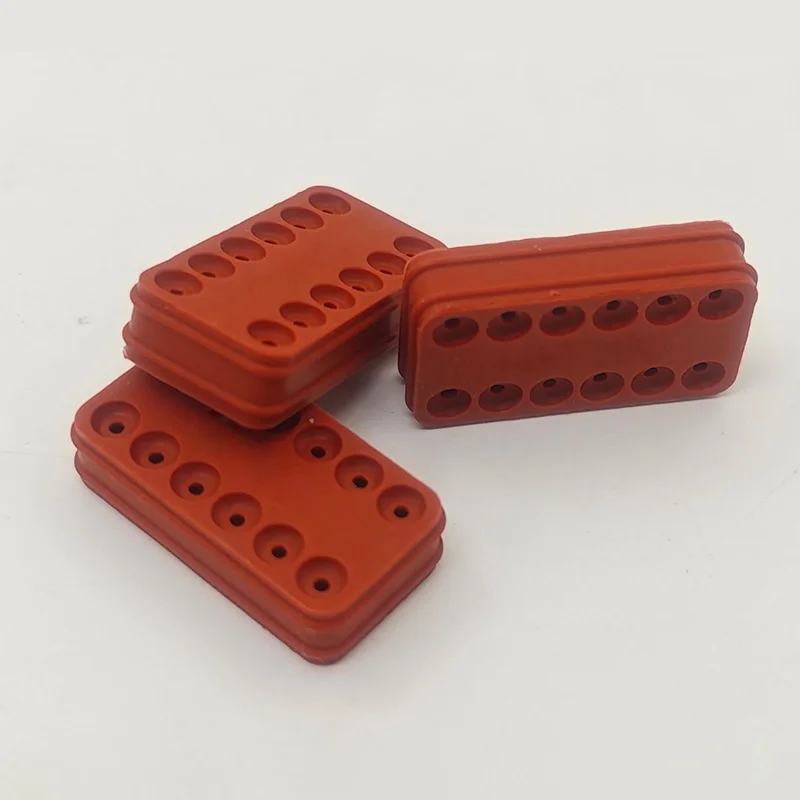
I. Multi-port seals with "single-port leakage": This problem is most common in models with 12 or more ports, resulting in a return rate exceeding 30%.

The most frustrating scenarios in procurement:

Last year, I helped a purchasing manager, Mr. Zhang from East China, handle an after-sales issue – he had ordered 100,000 sets of 16-hole sealing components.  The lab tests showed they were all up to standard, but six months after the car manufacturer installed them, they reported that "the 8th hole was leaking," and returned 30,000 sets.  The rework and replacement costs alone resulted in a loss of over 200,000 yuan.

Why did the problem occur?

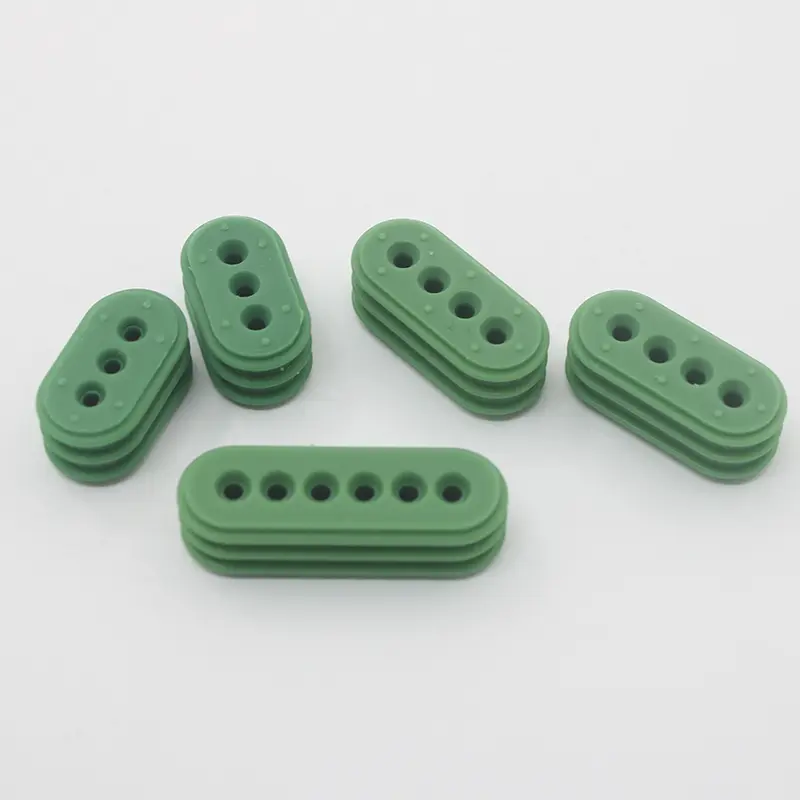
The problem isn't with the seal itself, but with multi-pin connectors like the 12-pin and 16-pin types, where the holes at the edges aren't properly sealed. It's like trying to put lids on 16 cups; the ones in the middle seal tightly, but the ones on the edges always leave a gap. When the car bumps around, water and oil can seep into the connector's seal. We've found that for models with 12 or more pins, if preventative measures aren't taken, the return rate due to this "single-hole leakage" can reach 32%.

How to avoid pitfalls in procurement? (3 actionable steps you can implement immediately)

1. Request the "Hole Pressure Test Report" from the supplier: Don't just rely on the IP67 certification; ask the supplier to provide test reports for each batch.  Pay close attention to the pressure data for the "edge holes" and "middle holes." Only accept the product if the difference is small (≤5%); reject it if the difference is too large.

2. During trial production, perform an additional "vibration test": Have the supplier place the connectors with the seals installed on a machine that simulates car vibrations for two hours, then test them by submerging them in water. If there are no leaks, then place a bulk order. This step, which costs a few hundred yuan in testing fees, can save tens of thousands of yuan in return costs.

3. During assembly, pay attention to the "compression amount.":Clearly instruct the factory that the seals should be compressed to "80% of their original thickness" (for example, if the original thickness is 10mm, it should be compressed to 8mm).  It shouldn't be too loose or too tight. Ask the supplier to provide a "compression reference chart" so that the workers can easily understand it.

Ⅱ New energy high-voltage seals are "not durable": Samples for 800V projects are frequently rejected, delaying the procurement cycle by two months.

The most urgent procurement scenario: A car manufacturer in South China was working on an 800V high-voltage connector project last year. They contacted three suppliers, but the first two batches of samples were rejected by the car manufacturer—either the high-temperature resistance was insufficient, causing the connectors to harden after only 30 days in the battery pack; or the high-voltage resistance was inadequate, leading to breakdown during testing.  The sampling process alone took two months, and they almost lost the order.  

Why did the problem occur?

Ordinary seals cannot withstand the "double torment" of high pressure and high temperature: a seal that can withstand the 160℃ temperature of a battery pack cannot withstand 10kV of high voltage; and a seal that can withstand high voltage cannot withstand high temperatures. Many small suppliers will "cut corners," using ordinary materials to pass off as suitable, and while the samples might pass testing, they fail once installed in the vehicle.

How to avoid pitfalls when purchasing high-voltage seals for new energy vehicles? (2 key inspection points)

1. Ask the supplier whether the rubber used is a composite material: Don't just accept vague promises like "high temperature resistance" and "high pressure resistance."  Ask specifically if it's "composite silicone"—simply put, "the inner layer resists high pressure, and the outer layer resists high temperature." Request a "material testing report" from the supplier and check if it contains "nano-aluminum oxide" and "phenylsiloxane." If these components are present, then it's reliable;

2. During the sample stage, perform a "aging + high-pressure dual test": Have the supplier place the seals in an oven at 160°C for 1000 hours, then remove them and test them under high pressure.  Only if there is no breakdown or hardening are the seals considered qualified. Although this step adds 3 days to the process, it can prevent major problems during mass production later on.

Ⅲ Faulty Assembly: 20% of failures are due to "assembling good parts into defective products," resulting in wasted material costs for procurement.

The most unfortunate procurement scenario: A car manufacturer in North China encountered an even more frustrating situation last year – they ordered 50,000 sets of seals, but the workshop workers used screwdrivers to force them into place and even used pliers, resulting in 30% of the seals being scratched and cracked.  These seals leaked after being installed in the cars, and despite being perfectly good products, they had to be sold as scrap, resulting in a loss of over 80,000 RMB.

SAE data reveals a more disheartening truth: 21% of seal failures are not due to defective products, but rather incorrect installation. The most common mistakes include "using metal tools to pry," "installing it backward," and "applying excessive pressure," each of which can turn a perfectly good product into a defective one.

How to control procurement costs? (This can be solved in just one hour)

1. Have the supplier provide a "specialized tool kit": Don't let workers use their own screwdrivers; request a matching "plastic tweezers + guide sleeve" from the supplier. Metal tools should absolutely not come into contact with the seals—the tool kit we provide to our customers can reduce the scratching rate from 82% to 3%.

2.  Conduct a simple one-hour training session: Have the supplier send a technician to explain three key points to the workshop workers: ① Use specialized tools; ② Pay attention to the "orientation mark" on the seal (the supplier will print "this side faces inward"); ③ Compress according to the "compression amount reference card," don't rely on guesswork;

3.  (acceptance checklist card) will be included with the shipment: After the workers complete the installation, they should fill in three pieces of information on the card – "tools used, orientation, and compression amount" – and then sign it before passing it on. This allows for quick identification of who is responsible if any problems arise.

Procurement pitfalls summary: Ask your suppliers for these "3 things," and you can prevent 90% of potential problems.

Actually, you don't need to know too much technical detail when purchasing seals. When dealing with suppliers, whether it's for new samples or bulk orders, as long as you get these three things in advance, you'll generally avoid major problems:

1. Application Compatibility Table: Clearly ask, "Is my connector installed in the engine compartment or the battery pack? What temperature range does it need to withstand?" Have the supplier fill out a compatibility plan; don't buy a "generic" product;

2. Key inspection reports: For multi-port systems, a "port pressure gauge" is required; for high-pressure systems, a "composite material testing report" is needed; and for assembly, "tools + training plan" are required.

3. After-sales guarantee commitment:  Include clauses in the contract such as "replacement guaranteed if the trial order leaks," "free assembly training," and "supplier bears rework costs for mass production failures," thereby transferring the risk to the supplier.

Related News
X
We use cookies to offer you a better browsing experience, analyze site traffic and personalize content. By using this site, you agree to our use of cookies. Privacy Policy
Reject Accept