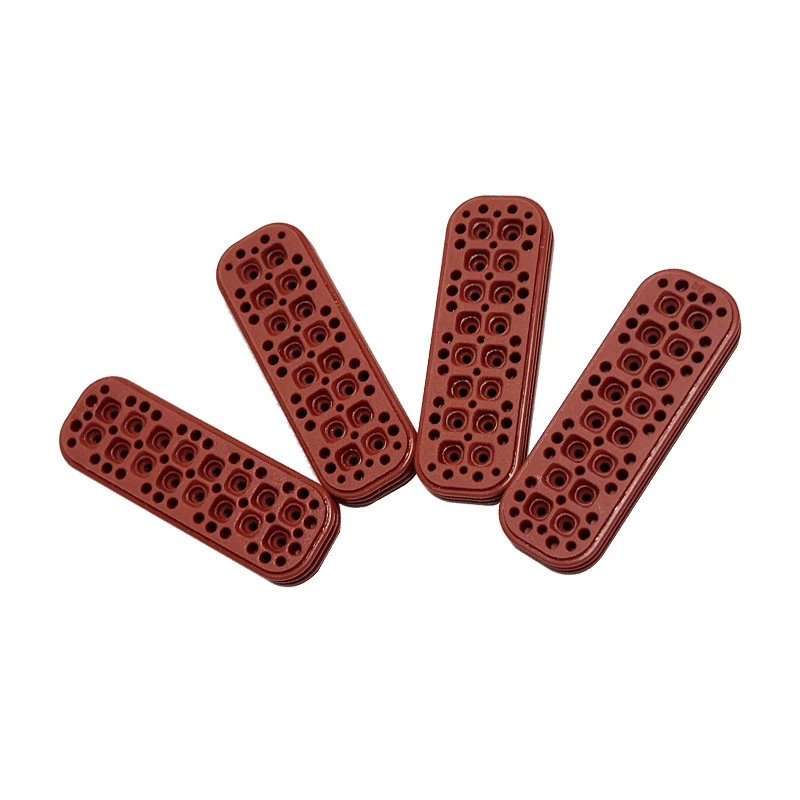
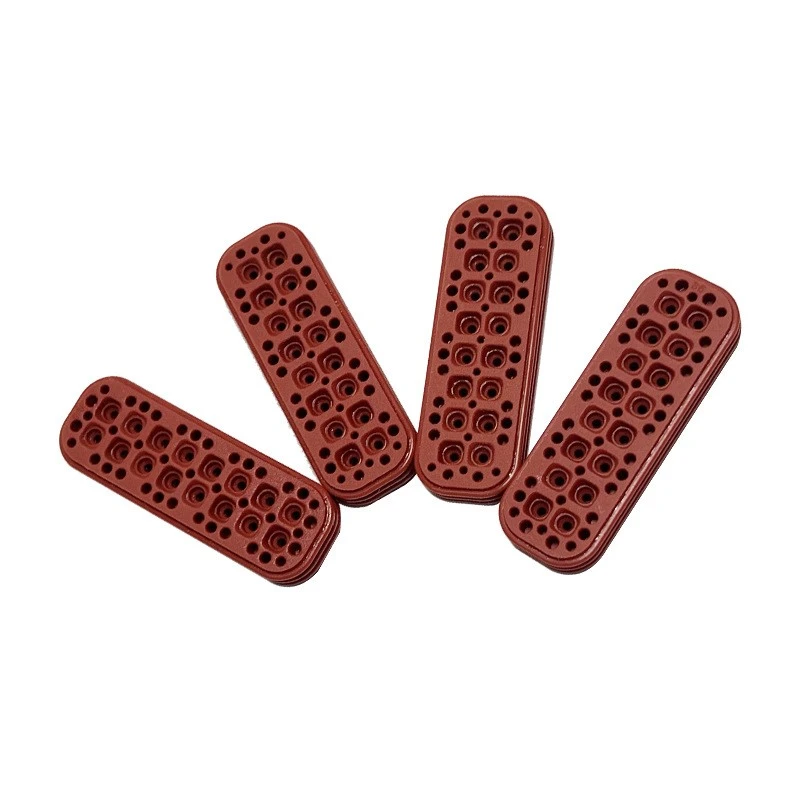
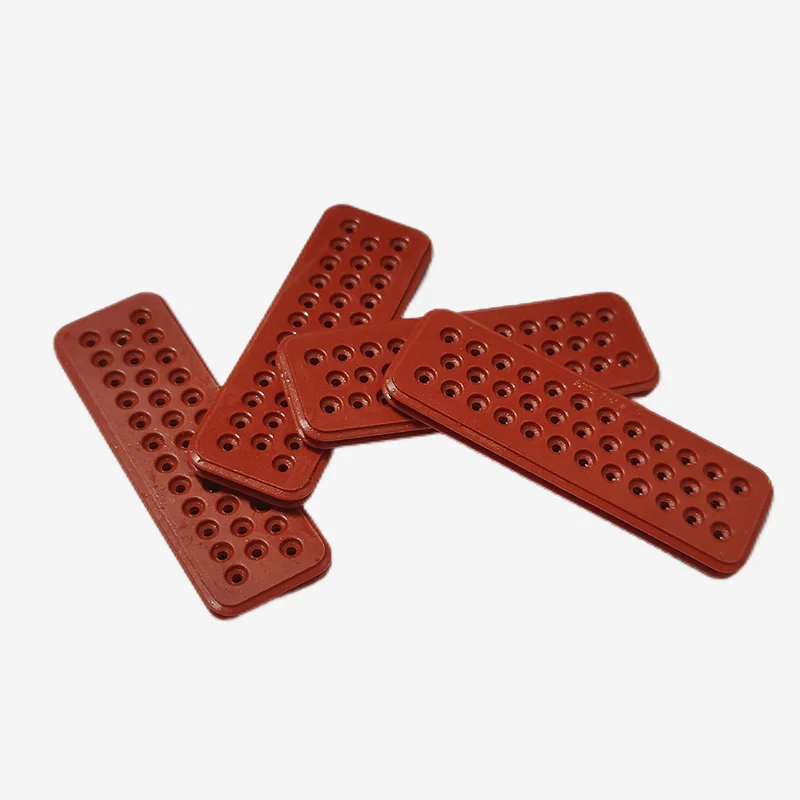
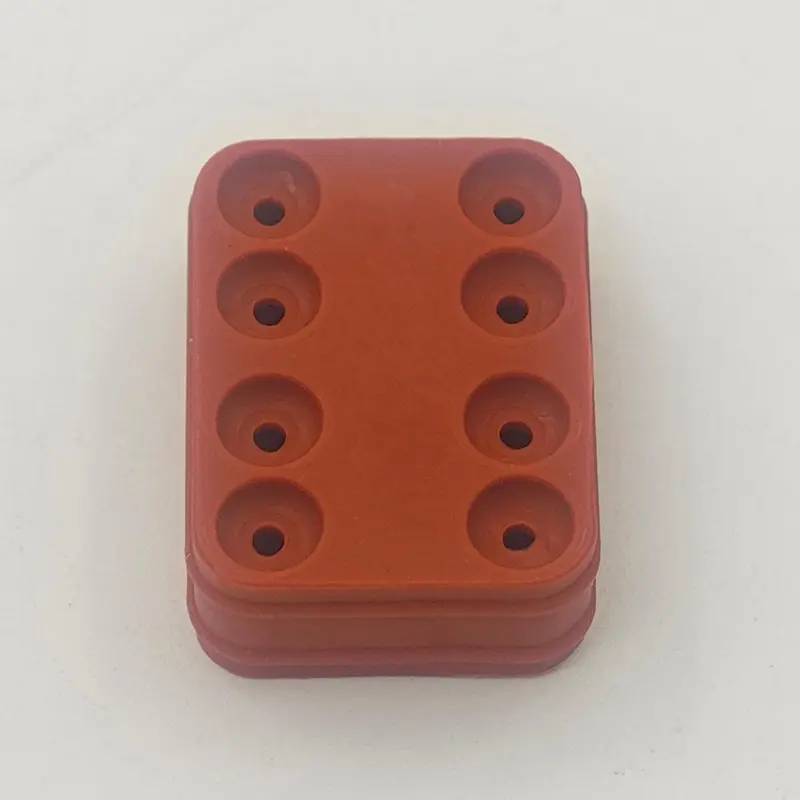
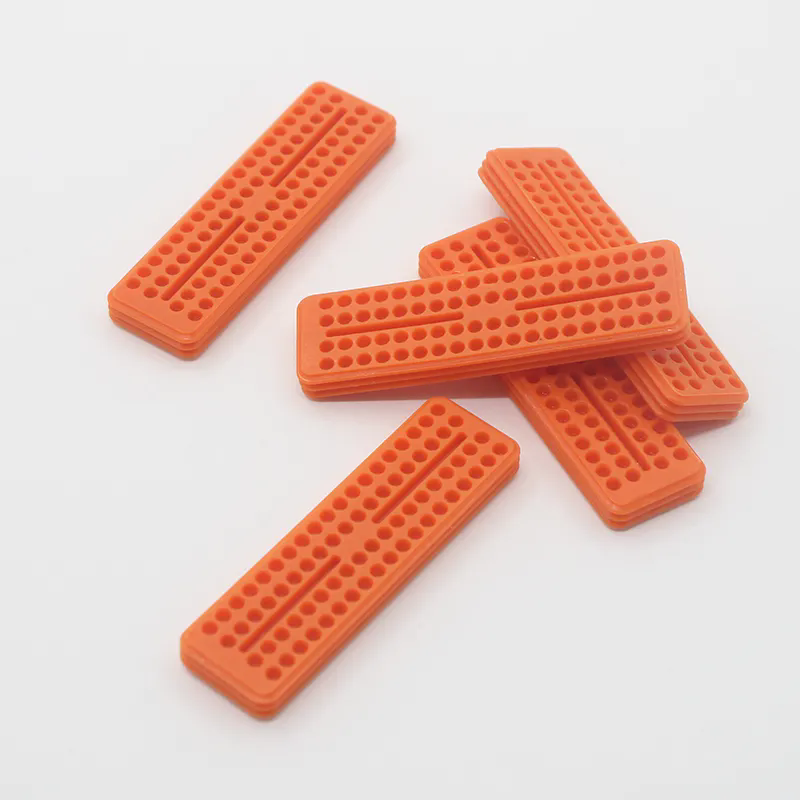
Sixteen positions on one housing, and one part to deal with all of them. Press it down until the rim meets the housing face, and that is the job done. Nothing to count, nothing to drop, no hole left open at the far end of a long connector.
a 12-way or 20-way housing needs its own tool, and a trimmed gasket will not do
2.03 mm
the hole at each position
off-center, and it will not line up with the cavity it serves
15.01 x 11.76 mm
the footprint, rounded ends included
a square outline lifts at the corners once the housing warms up
5.82 mm
the thickness, and how far it compresses
a thin plate seals at the face and nowhere else
Sealing principle
A gasket does not seal because it touches. It seals because it gets squeezed, and the squeeze comes from the housing closing down on it. Two things set how much squeeze you get: the thickness of the gasket, and the depth of the groove it sits in.
Too little squeeze, and the rubber never fills the machining marks on the face. Water finds those. Too much, and the rubber takes a set: it learns the shape it was held in, and the second time you close the connector there is nothing left to push back.
That is why 5.82 mm is a designed number, not a guess. Your groove depth has to match it, inside tolerance.
Outline
The rounded ends are not cosmetic. Rubber is thinnest at a sharp corner, and a sharp corner is the first thing to lift once the housing warms up and the plastic moves. Round it off and there is no corner to lift.
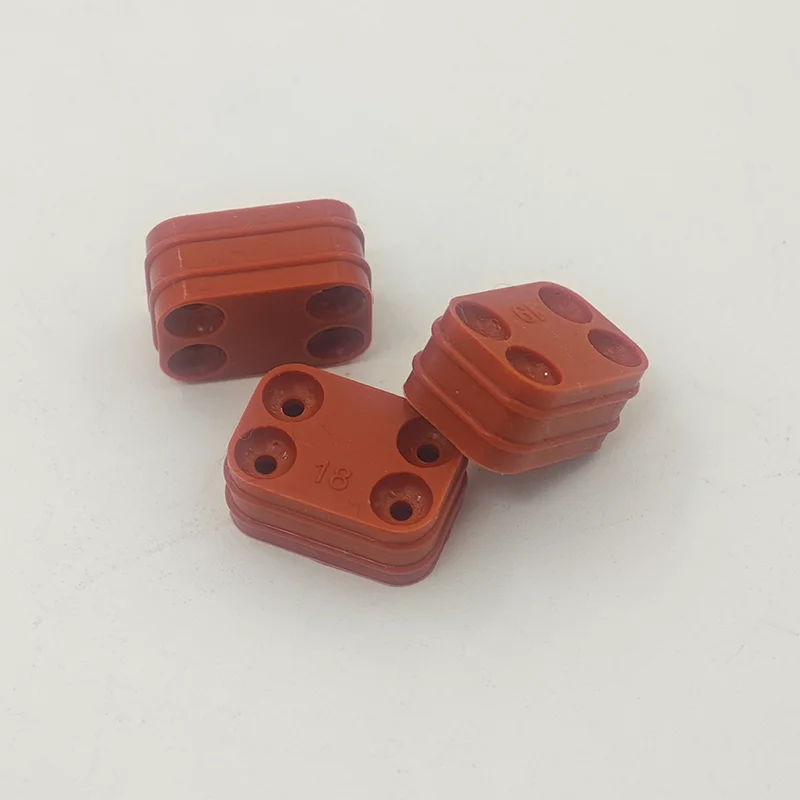
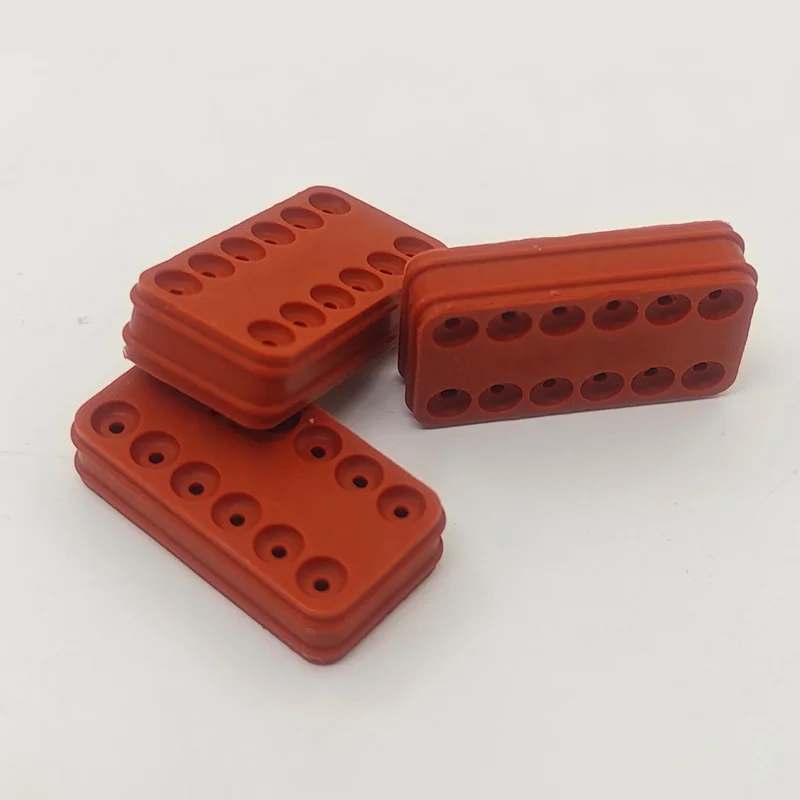
Each of the sixteen holes sits in a raised boss. The boss puts rubber back around the hole, so the hole keeps its shape while it is being squeezed. Punch sixteen holes in a flat sheet and the whole gasket ends up thin.
The web between the holes is solid, and that is what holds the pitch. One hole cannot drift against another, and the gasket cannot creep into line a bit at a time.
The color is in the compound, not on the surface. Scratch it and it is still red underneath. On a gasket that matters less than on a small part, but it comes out of the same batch.
Fitting and removal
Four steps, and the fourth one is the check.
1. Wipe the face. A speck of grit under the rim is the usual reason a gasket stands proud.
2. Start at one end and let the rest follow. Press the middle first and you trap air and fight it the whole way.
3. Press the rim, not the middle. The middle is the web over the holes; push there and it bows and lifts the ends.
4. Stop when the rim is flush with the housing face. That is the whole inspection.
To take it out, pull once. Hook the rim at a rounded end and lift. If it fights back, one end has cocked - press that corner down again before you pull, or the rim tears.
What it cannot do
Better said before the sample than after it.
• It cannot flatten out a face that is scratched, warped or sitting on flash. It seals what it is pressed against, nothing more.
• It keeps water out. It does not hold pressure in. If the housing has to take pressure, tell us before we quote.
• One fit only. Once it has been squeezed and released it will not come back to full thickness, so open a new one instead of refitting it.
The part in numbers
Product Name
16 Pin Red Connector Sealing Gasket
Positions
16, two rows of eight
Hole diameter
2.03 mm
Length
15.01 mm
Width
11.76 mm
Height
5.82 mm
Color
Red
Material
Rubber or silicone, compound picked with you
Packing
Plain cartons, fixed counts
FAQ
Q: What if one hole gets damaged?
A: Then the gasket is finished, and it is fair to know that up front. A torn hole leaves that position open, and at this size you can see the damage. Replace it rather than fit it and hope.
Q: Can it be made in silicone instead of rubber?
A: Yes. What picks the compound is what the connector lives with: heat, oil, coolant, weather. Tell us where it sits and we will name one material and stand behind it, instead of handing you a list to choose from. This 16 Pin Red Connector Sealing Gasket works with both materials.
Q: How is it packed?
A: Fixed counts in bags, plain cartons, no logo unless you ask. The gaskets are flat and stack without crushing the raised bosses. If your line counts by weight, say so and we will set the bag count to suit your scale.
About us
Zhejiang Guoming Rubber Technology Co., Ltd. is in Yongjia, Wenzhou, and makes molded rubber and silicone parts for automotive connectors. The tool shop and the presses are in the same building, so a change such as a hole diameter takes days rather than a purchase order to an outside toolmaker.
• Silicone (VMQ), EPDM, NBR, HNBR
• Connector gaskets and sealing parts
• IATF 16949, full batch traceability, PPAP on request
• Samples from production molds
• Plain cartons, fixed counts
If you have the housing, send the housing. A gasket tried in the real groove settles more than a drawing does.
For inquiries about Automotive Connector Seals, Overmolded Plastic and Rubber Seals or price list, please leave your email to us and we will be in touch within 24 hours.
We use cookies to offer you a better browsing experience, analyze site traffic and personalize content. By using this site, you agree to our use of cookies. Privacy Policy