Follow Us:

News

Why Do They Pass Lab Tests Yet Fail in the Field? An Analysis of the 3 Most Common Pain Points in Automotive Connector Seals

2026-03-13 0 Leave me a message

Common Issues with Automotive Connector Seals: 3 High-Frequency Pain Points and Engineer-Level Solutions

With 11 years of experience in the automotive connector seal industry, I conduct failure analyses for over 20 clients annually. Purchasing managers most frequently ask, "Why do issues consistently arise after mass installation in vehicles?" Meanwhile, design engineers are often perplexed by the question, "Why do parts that meet laboratory standards fail once deployed in the field?" Drawing upon industry survey data from SAE International in 2024—which indicates that 32% of seal failures stem from inadequate design fit, 47% from mismatches with operating conditions, and 21% from assembly errors—I have compiled the three most common categories of issues that concern purchasers and engineers alike. For each category, I provide real-world case studies, empirical test data, and actionable solutions.

I. "Localized Seal Failure" in Multi-Pin Connectors: For models with 12 or more pins, 32% of failures are attributed to leakage at a single pin.

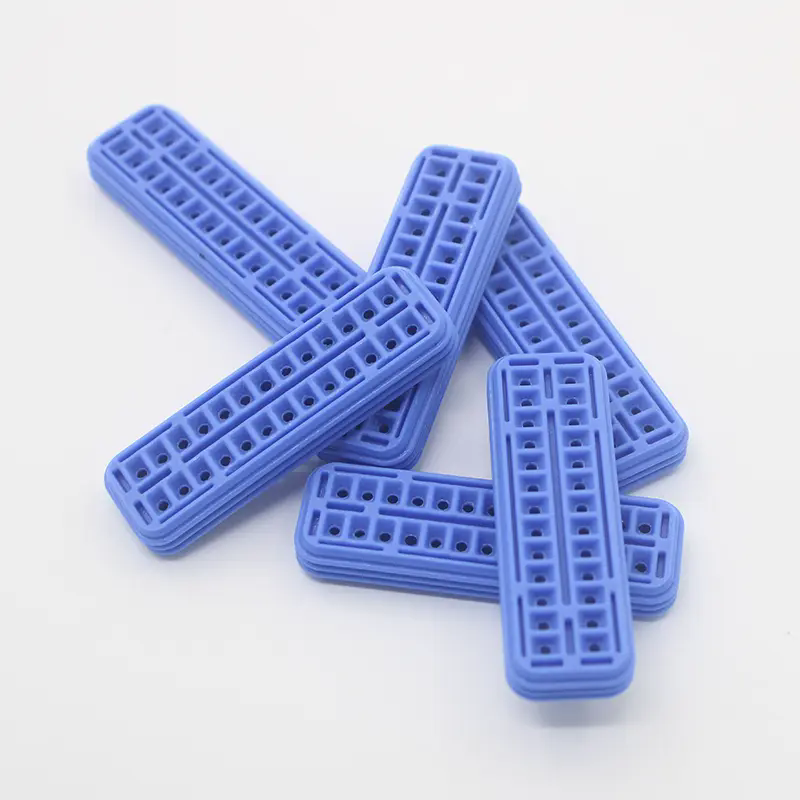
The Scenarios That Give Buyers the Biggest Headaches:Last year, we supplied 16-pin connector seals to a commercial vehicle manufacturer. While the products successfully passed all laboratory-based IP67 immersion and dust-resistance tests, the client reported—six months after vehicle installation—that "engine compartment contaminants had penetrated the 8th pin position." Upon retrieving and inspecting the units, we discovered that the compression rate of the sealing lip at that specific pin position was merely 12%—significantly below the standard requirement of 20%. This type of "single-pin failure" accounts for as much as 32% of issues in multi-pin connector projects involving 12 or more pins, making it the leading cause of bulk returns in procurement.

The Core Bottleneck from an Engineer's Perspective:Most designs focus solely on the "±0.01 mm tolerance for individual holes," while overlooking the issue of "uneven stress distribution during overall compression." In a 16-hole sealing component, the peripheral holes are influenced by the housing structure; consequently, they experience 15–20% less compressive force than the central holes. When compounded with the 10–2000 Hz vibrations encountered during vehicle operation, this leads to the development of slack and gaps in the sealing lips after just three months.

Supported by Empirical Data:We utilized FEA (Finite Element Analysis) to simulate the compression conditions of a 16-hole seal; the average sealing pressure at the peripheral holes was 0.3 MPa, while the central holes reached 0.4 MPa—a pressure differential exceeding 25%. When this pressure differential is controlled within 5%, the probability of localized failure decreases from 32% to 4%.  

Solution (Validated and Deployed at 3 Clients):

1. Design-Side Stress Compensation:Using FEA to simulate the combined "compression + vibration" operating condition, the sealing lips at the peripheral hole positions were thickened by 0.1 mm; simultaneously, the diameters of the corresponding mold holes were reduced by 0.005 mm, resulting in a naturally balanced stress distribution after molding.

2. The delivery side provides a "Stress Test Report.":Provide the purchaser with actual stress measurement data for the 12 designated points on the seals accompanying each batch, ensuring that the pressure differential remains ≤ 5%.

3. Assembly End Establishes "Compression Limit Redline":The assembly manual highlights in red: "The compression of the edge holes must reach 20% ± 2%." A dedicated feeler gauge is provided for this purpose; upon completing the assembly, workers are required to take actual measurements and record the results.  

II. "Material Performance Contradictions" in New Energy High-Voltage Applications: In 800V Projects, 47% of Samples Were Rejected Due to Incompatibility Between Thermal and Arc Resistance.

The Most Contradictory Demands of Design Engineers:For an 800V high-voltage connector project at a new energy vehicle manufacturer, the sealing components were required to withstand 160°C (the peak temperature of the battery pack) and pass a 10kV arc resistance test. However, conventional materials faced a "catch-22" dilemma: high-arc-resistance silicone could only tolerate temperatures up to 140°C—hardening after just one month of vehicle installation—while heat-resistant silicone experienced a 35% decline in arc resistance performance at 160°C, resulting in dielectric breakdown after only 60 seconds of testing. Such "material incompatibility" issues led to the rejection of 47% of initial samples in this 800V project, severely delaying the procurement cycle.

Core Point of Contention:The "thermal resistance" and "arc resistance" of silicone are inversely correlated: the addition of arc-resistant additives (such as nano-alumina) destabilizes the siloxane molecules, thereby lowering the upper limit of thermal resistance; conversely, the addition of high-temperature-resistant additives (such as phenylsiloxane) dilutes the arc-resistant components, thereby compromising insulation performance.

Solution (The tangible result of 12 formula iterations):  

1. Customized Compound Formulation:In collaboration with material manufacturers, we developed a composite material consisting of fumed silica, 1.5% nano-alumina, and 2% phenylsiloxane. Following a 1,000-hour aging test at 160°C, the material exhibited a hardness variation rate of ≤8% and an arc resistance time of 80 seconds at 10 kV—far exceeding the client's requirement of 60 seconds.  

2. Hierarchical Structural Design:The inner layer of the seal (in contact with the high-voltage pins) utilizes high-arc-resistance silicone, while the outer layer (in contact with the housing) employs high-temperature-resistant silicone; this approach not only resolves conflicting performance requirements but also reduces material costs by 15%.  

3. System-Level Co-optimization:A Recommendation for Buyers and Engineers: Adding three heat-dissipation fins to the connector housing reduces the actual operating temperature of the seal from 160°C to 145°C, thereby further extending its service life.

Data Validation:Following its implementation in the 800V projects of two new energy vehicle manufacturers, this solution boosted the sample pass rate from 53% to 100%, while the defect rate after mass installation remained ≤0.03%.

III. "Latent Failures" Caused by Assembly Errors: 21% of Issues Stem Not from Defective Products, but from Incorrect Assembly.

The Losses Most Easily Overlooked by Buyers:A passenger vehicle manufacturer in North China reported instances of "cracking and failure in sealing components." Upon disassembly and inspection, it was discovered that 70% of the failed parts exhibited a compression rate exceeding 30% (compared to the standard limit of 20%). This issue stemmed from assembly workers—in an effort to "optimize sealing performance"—forcibly prying the seals into their grooves using screwdrivers; this practice not only resulted in excessive compression but also damaged the sealing lips. A 2024 survey by SAE indicates that 21% of sealing failures are attributable to assembly errors; such issues effectively transform "qualified products" procured by the company into "scrap," while also causing production delays.

Common Assembly Errors and Their Consequences: 

Error Type Probability of occurrence Direct consequences Impact on Lifespan
Metal tool scratches the sealing lip. 42% A latent leak, which expands into a channel following vibration. Lifespan reduced to one-third.
Compression > 25% 38% The sealing lip has undergone permanent deformation, with a compression set exceeding 30%. Expires within 3 months.
Seal installed backwards/twisted 20% The IP rating drops directly to zero; water ingress occurs after just 10 minutes of immersion at room temperature. Effective immediately

Solution (Post-training failure rate reduced by 90% across 5 clients):  

1. Tool Standardization:Provide buyers with a dedicated "Specialized Installation Tool Kit"—including plastic tweezers for rubber seals and copper guide sleeves for fluororubber seals—to ensure that no metal tools come into contact with the sealing lips.  

2. Visual Error Proofing:A red "orientation mark" (e.g., "This Side Inward") is printed on the seal, corresponding to the markings on the connector housing; a "Compression Measurement Card" is included with the shipment, indicating the standard compressed thickness for this specific seal model (e.g., original thickness: 8 mm → compressed thickness: 6.4–6.8 mm).

3. 1-Hour Specialized Training:Assembly workers are instructed on the "Three-Check Principle"—verifying tools, orientation, and compression—followed by a live demonstration of the correct procedures. Any worker failing to meet the standards must undergo retraining until they successfully pass the practical assessment.

Final Advice for Buyers and Engineers: To Avoid Pitfalls, "First Assess the Scenario, Then Determine the Solution."

The longer one works in this field, the clearer it becomes: there is no such thing as a "universal" seal model. Many issues arise because the specific operating environment—the "scenario"—has not been thoroughly understood. When making a purchase, do not focus solely on factors like "IP ratings" or "temperature resistance ranges"; instead, be sure to ask the engineers these three questions:

1. Where are the connectors installed in the vehicle? (Engine compartment, battery pack, or doors—locations with vastly different operating conditions.)  

2. Will assembly be performed using automated equipment or manually? (This impacts the structural design of the seals.)  

3. What are the implicit requirements within the end customer's acceptance criteria? (e.g., performing IP67 testing after low-temperature immersion)  

Related News
Leave me a message
X
We use cookies to offer you a better browsing experience, analyze site traffic and personalize content. By using this site, you agree to our use of cookies. Privacy Policy
Reject Accept